
BOM BOM: Jason Wang
How changing attitudes to pet nutrition created a category.
Billy Park / 15 November 2023
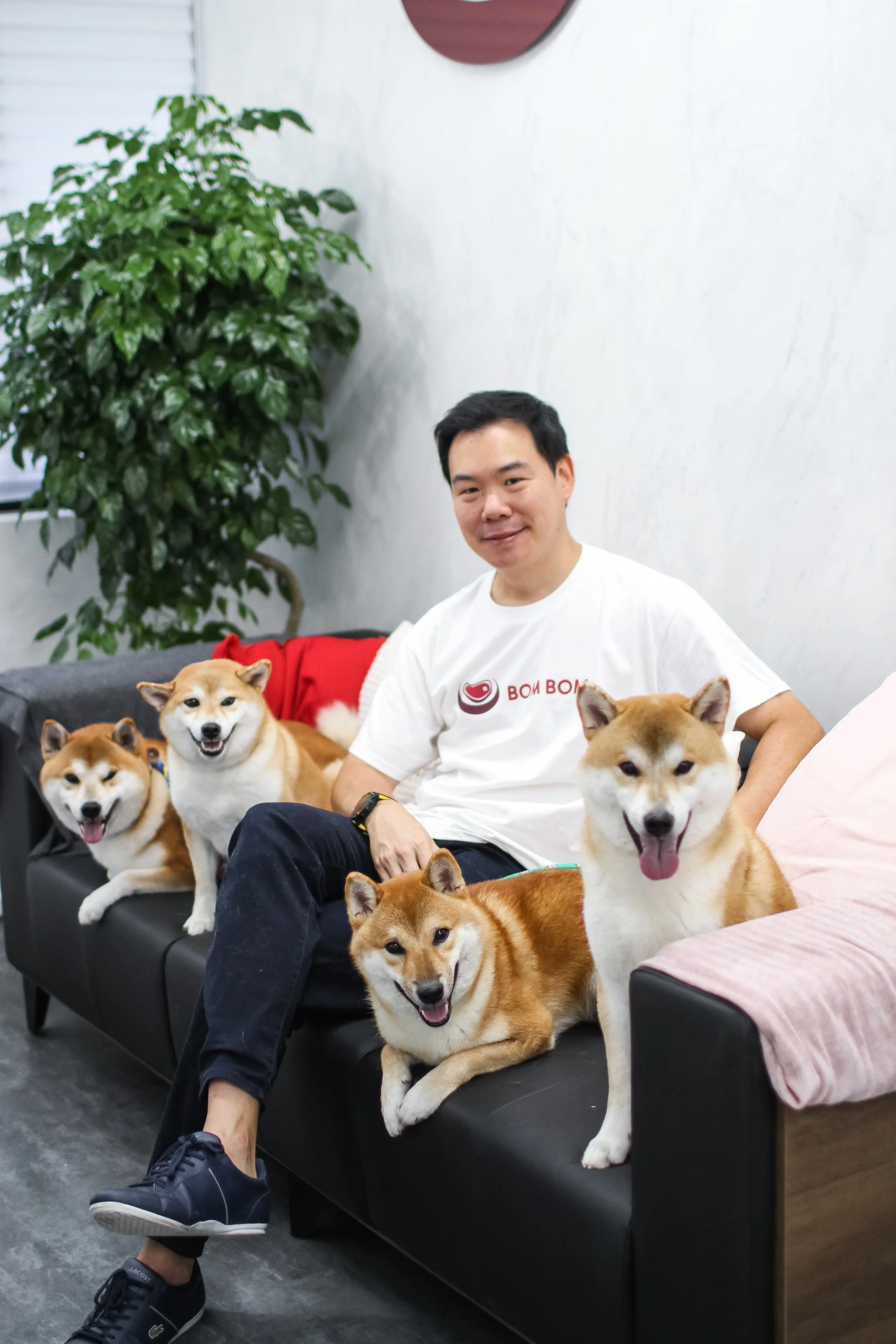
The pet food industry has undergone a significant transformation in recent years, reflecting changing attitudes toward pet nutrition and a growing awareness of the importance of providing high-quality, wholesome diets for our furry companions. One of the most notable trends is the shift toward raw and fresh food diets.
We sat down with Jason Wang, the founder of BOM BOM, which leads the charge for species-appropriate, customised fresh meals.
What is BOM BOM?
In 2017, BOM BOM was founded and AVS-licensed in order to serve the countless pets that required an individualised diet. Its popularity far exceeded expectations and outgrew its former central kitchens to form Singapore’s largest modern pet food manufacturing facility. With every upgrade and expansion phase, BOM BOM has pushed standards higher for the industry with regard to individualisation options, R&D capabilities, and food hygiene.
How did it all start?
The origin of BOM BOM has its roots in a personal experience involving my Shiba Inu, Kyubi. In his early years, Kyubi faced significant health challenges: joint problems, fur loss, incessant scratching, and malnutrition, despite his pedigree. Veterinary assistance and conventional allopathic treatment yielded limited results. After weeks of elimination and research, I realised that Kyubi’s diet might have been the underlying issue.
Leveraging my background in research and analytics, I delved into canine anatomy and nutrition, and discovered a disconnect between veterinary recommendations and what I believed was best for Kyubi. My exploration extended to the evolution of companion animal diets, highlighting the contrast between traditional diets and the modern prevalence of processed kibble, alongside rising cancer rates in pets.
This journey prompted a careful adjustment of Kyubi’s diet, focusing on macronutrient intake and formulation balance. The results were striking: Kyubi’s health and coat improved, and even a knee issue (luxating patella) and demodex began to resolve.
What began as a personal endeavour soon gained attention from fellow pet owners who observed Kyubi’s transformation. Initially I volunteered to help others create customised diets for their pets. One morning it became clear that this was my true calling: to enhance pet well-being through nutrition. I recognised that proper nutrition could ease not only pet suffering but also the financial burdens on pet owners. Thus BOM BOM was born.
My childhood aspiration of working with animals and ensuring they receive the care and nutrition they deserve had come to fruition. This venture allowed me to assist numerous pet owners in providing their furry family members with the nutrition essential for their well-being, much like I did for Kyubi.
Can you discuss a specific achievement you are particularly proud of?
I’m most proud of BOM BOM’s journey: from a passion project to a thriving international player in pet nutrition. It’s not just about financial growth, but the support we’ve garnered from pet parents who believe in our principles. Initially seen as a fad, we’ve won over both pet owners and progressive vets who now recommend our diet to address chronic health issues. Convincing academia and consumers in the industry has been a significant achievement, and the positive impact we’ve had on thousands of pets is something that always drives me to do better still.
What obstacles did you encounter while scaling, and how did you address them?
Scaling up presents a constant and multifaceted challenge. We’re always navigating financial priorities, time constraints, manpower limitations, and balancing the demands of hardware and software improvements to serve our growing customer base.
Manpower is particularly crucial. While it may be less of a concern for pure software companies, for a manufacturing company like BOM BOM our people are a cornerstone of the business, and that was the biggest difficulty as we scaled.
As a leader, how do you keep your team motivated and engaged?
I believe that job titles like CEO or manager don’t confer superiority. I actively engage with everyone, including regular lunches with managers and interactions with staff. I value every individual, regardless of their role, as crucial to our company’s success. Those who may perceive their work as mundane are among our most vital team members, without whom the company can’t function.
It’s important for these team members to know that I not only support them but also look after their well-being. I’ve maintained this approach over the years, rejecting any high-and-mighty attitudes. Being an entrepreneur or CEO isn’t about a big paycheck: in fact, I was unpaid for years and the lowest-paid employee. It’s about serving and supporting the team.
This mindset empowers my staff to conquer challenges. Knowing that the owner and founder are fully invested is essential for business growth and a strong company.
What legacy do you hope BOM BOM leaves, and how do you measure impact beyond financial success?
Our goal is to positively impact pets through holistic health and nutrition. We measure success by reach, not just finances. We prioritise science and truth, adapting recommendations based on research. Our legacy is defined by our commitment to improving pet welfare and longevity through new technology and superior global sourcing for ethical produce.
Our vision for BOM BOM is long-term sustainability in the pet food industry, focusing on lasting improvements in pet health and happiness. So far, no other company has come close in maintaining a database as large and valuable as ours when it comes to pet nutrition.
What advice would you give entrepreneurs thinking of expanding to another country?
Expanding a business, especially in Asia with its diverse geography, poses unique challenges. Unlike the relatively homogeneous culture across states in the US, Asia exhibits vast cultural and consumer behaviour differences, both within and across countries. Thorough due diligence is paramount, and an ongoing process even after market entry.
Assess whether your product aligns with the target geography. Consider the financial resources required and whether your expansion strategy is scalable across borders. Language barriers also require careful consideration, both internally and externally.
While these challenges can deter entrepreneurs, I encourage them to be brave and base decisions on logic and data. Many are discouraged by the extensive effort involved in internationalisation, but if the numbers make sense and you believe it’s feasible, go for it. Maintain financial and manpower buffers, avoid unnecessary risks, and remain diligent about compliance with local regulations.
Respecting local cultures is essential. Marketing messages that work in one country may not resonate in another, making each new country expansion akin to starting a different business. Treat it as such, and navigate the intricacies with care and respect.
What advice do you have for entrepreneurs seeking investment or starting their own company?
Bootstrap or secure adequate funding. In the early stages, consider self-funding or contributions from family or friends, but avoid taking bank loans: they add interest costs without revenue generation. Debt isn’t advisable until your venture is generating income.
Ensure you have enough capital to sustain your business without taking any income, especially if the company isn’t yet profitable. Plan for three to five years, depending on validation and product development cycles. Financial stability is crucial.
Passion and belief. Being passionate about your venture is vital. You’ll face moments of doubt and sacrifice, so believing in what you’re doing is essential. The journey can be emotionally challenging, especially when you’re not taking a paycheck.
Understand cash flow. Comprehend your business’s cash flow dynamics, drivers, and future needs. Budget not only for present expenses but also for reinvesting profits into future growth. Prioritise reinvestment for future scalability.
Seeking investors. If you can prove your product or service’s value and find like-minded believers, investors will come. Rejections are part of the journey; don’t let them deter you. James Dyson faced numerous rejections before achieving success.
Persevere and listen to feedback. Be resilient and open to feedback. Rejections often come with valuable insights. Every customer and investor may offer useful input to refine your business.
Financial prudence. Don’t overspend or let ego drive your decisions. Survival should be your priority. Focus on nurturing and understanding your business’s needs. Think about how to provide better service, and provision for risk to hedge against uncertainties.
What advice would you give your younger self?
Stay authentic to yourself. Understand your likes, dislikes, passions and goals: that is the foundation for resilience in challenging times.
Set aside ego. Titles like CEO or manager don’t make you superior to others. Listen to and support everyone within the organisation.
Seek and embrace feedback. Even amidst irrelevant input, valuable insights can be found. Focus on real, proven facts and numbers via mosaic theory: putting pieces of the facts together yourself and reaching your own independent conclusion.
Select business partners with care. They can make or break a venture. Understand their motivations and alignment with your goals. Thoughtful consideration over impulsive decisions ensures trustworthiness and a shared vision.